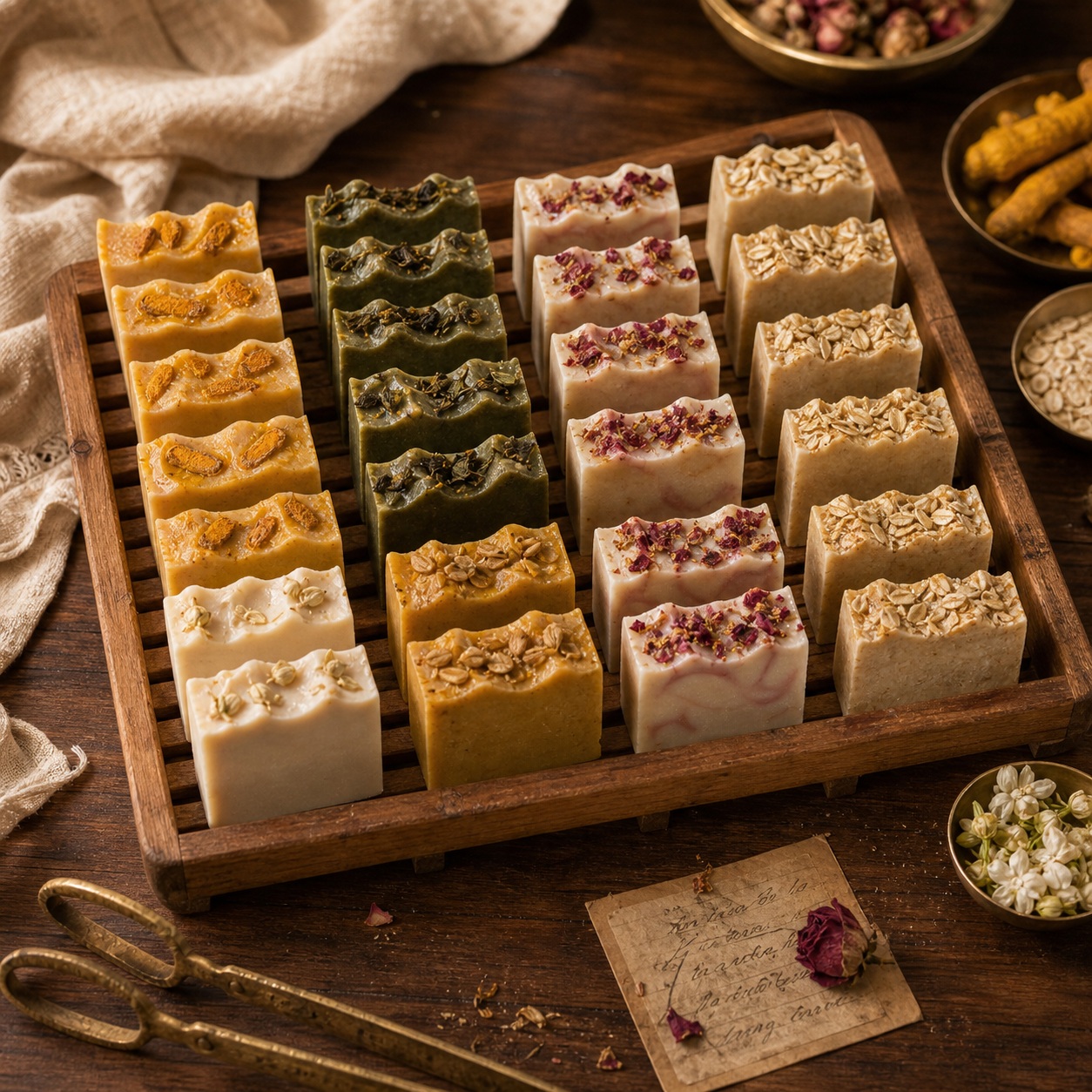
Six rituals. Eighteen soaps and one hair oil, made by hand. Cured slowly.
Every soap and the one hair oil in this house has been gathered into one of six Ayurvedic-inspired rituals, each a small daily practice named for what it is for. A brightening bar for the mornings of a wedding week, an oil for the night a hairline begins to thin, a bath for the end of a day that has asked too much. Begin with the ritual that names what your skin or your hair is asking for today, and let the rest of the catalogue come to you slowly, one batch at a time.
The first four bars to leave Archana's workshop arrived in the same quiet order across the year. The Tan Soap came in the spring of 2025, written down for the first time from a memory of her own mother's hands. The Honey Soap followed in summer, sealed with real Kashmiri honey from a friend who keeps bees in the high meadows. The Glass Skin Soap arrived later in the year, built around her grandmother's habit of saving the water used to wash the day's rice. The Anti-Hair Fall Oil joined them in autumn, after a son's hairline began to thin and a mother sat down at the kitchen counter to do something about it. Together, these four are the way most people begin a ritual.
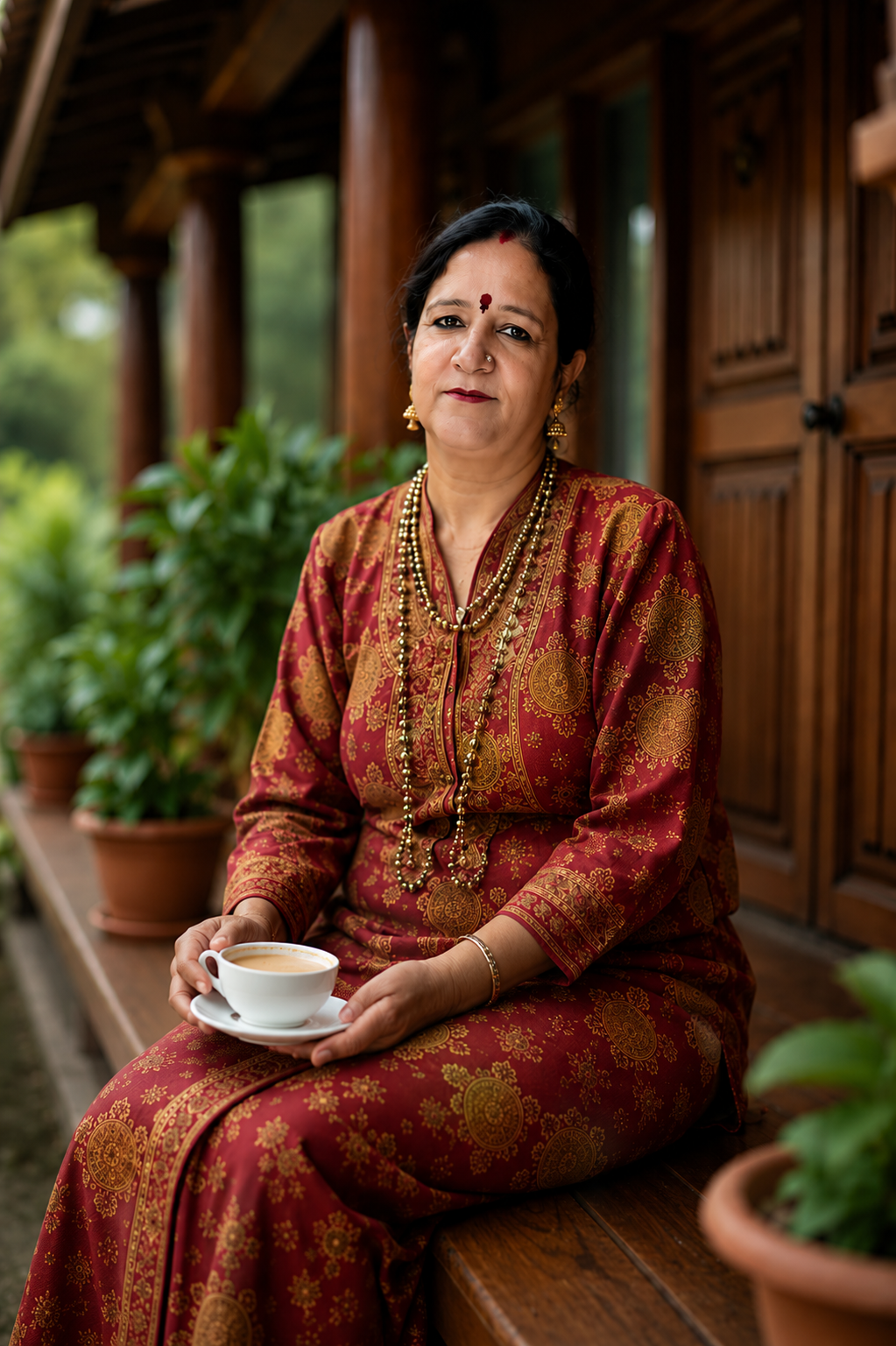
Archana Tandon ran an art school for thirty years before becoming the sole maker of Archana Veda. She closed the school in the year 2000 to raise her two children. She pressed the first bar of soap in the spring of 2025. Every bar that has left the house since has come from the same pair of hands.
"एक अच्छा साबुन लोगों को देना है जिसमें केमिकल नहीं है।"
A good soap. With no chemicals. That is the whole brief.
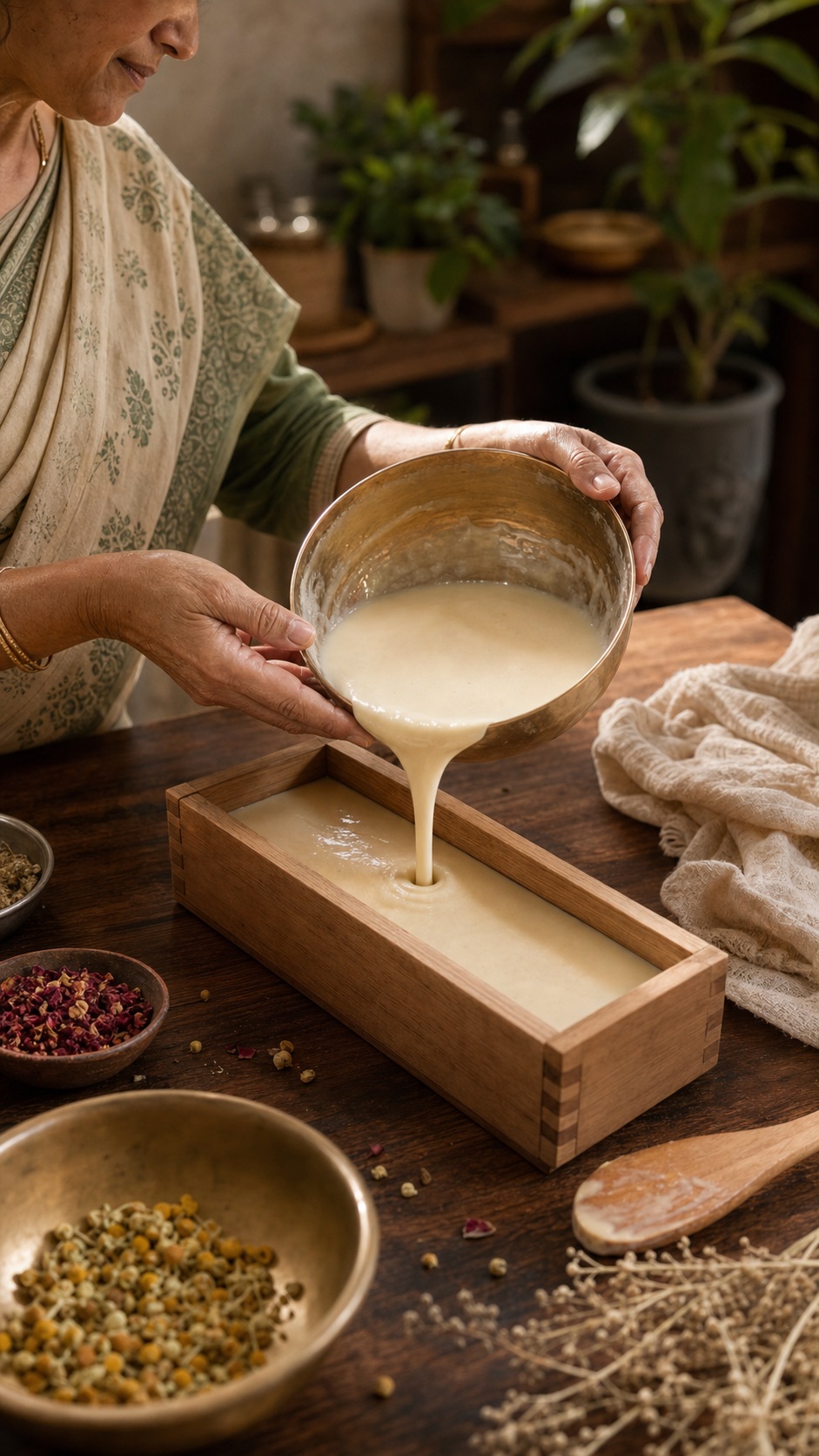
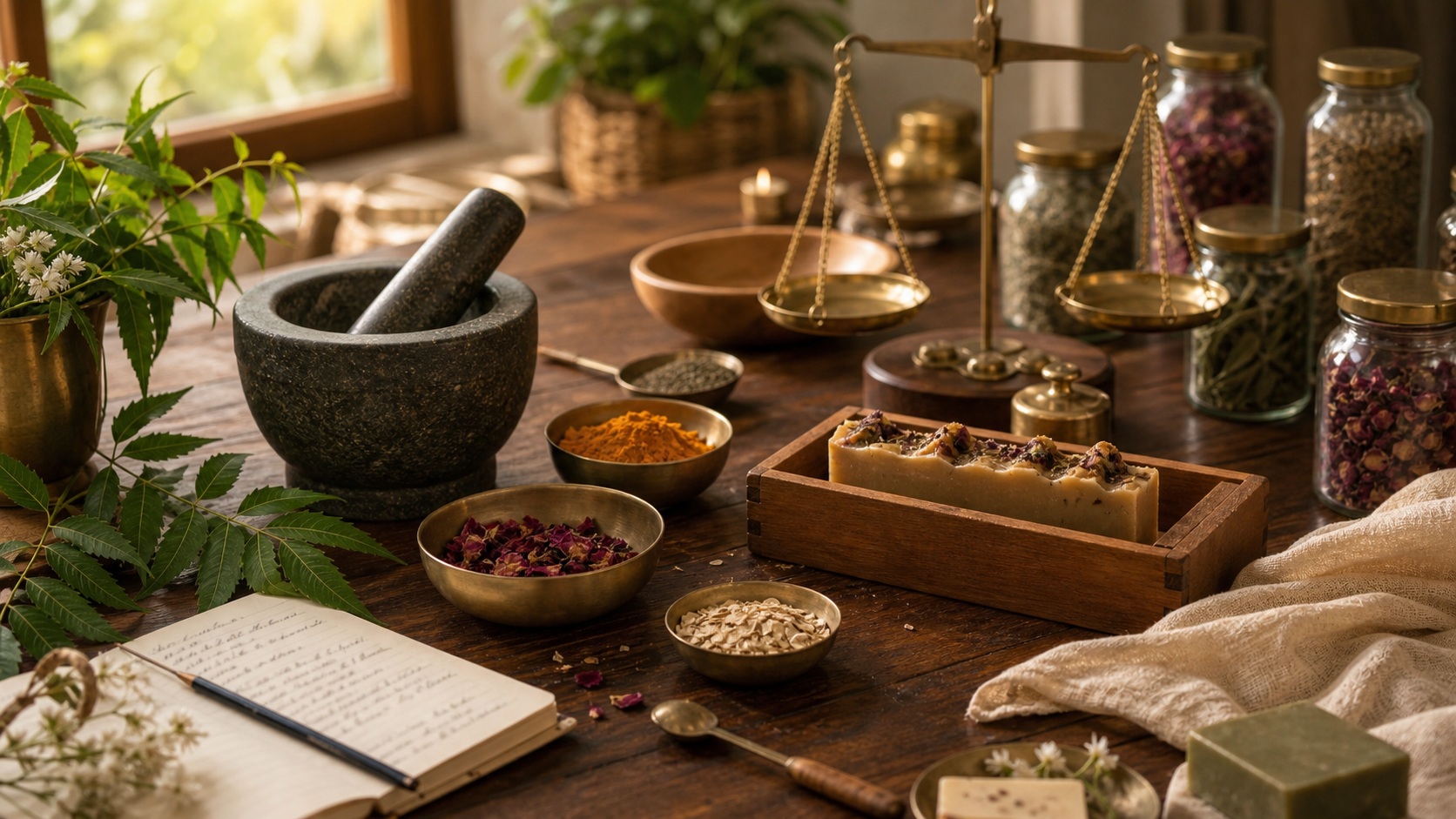
Most of what sits on Archana's shelf has been in her family for two generations or more. The neem comes from a tree behind her house that she has kept since she was a girl, picked the morning of any batch that needs it. The haldi comes from the same brass bowl her family has cooked with for as long as anyone remembers. The mogra is from the plant on her kitchen windowsill, dried in small handfuls through the year. The honey comes from a single friend in Kashmir who keeps bees in the high meadows, and every bottle is sealed with his name in pencil before it leaves the workshop.